
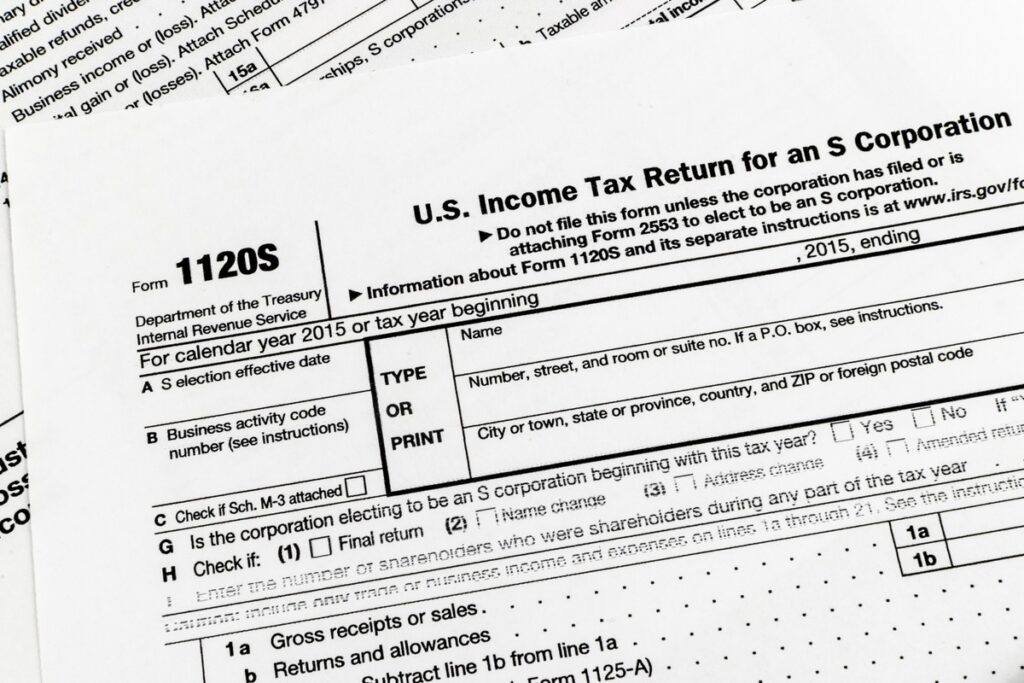
Quick answer: There is no "60/40 rule" or safe-harbor percentage for S corporation shareholder salaries. The IRS and Tax Court test reasonableness against what an unrelated employer would pay for the same work, using multi-factor analyses drawn from cases like Watson, Sean McAlary Ltd., Veterinary Surgical Consultants (Herbert), Lateesa Ward, and Blossom Day Care Centers. With Section 199A's qualified business income (QBI) deduction now permanent under the One Big Beautiful Bill Act (OBBBA), the salary/distribution split is no longer only an employment-tax question; for higher earners it also affects the QBI deduction. Get the number wrong and the exposure follows you personally, not just the S corporation election.
The Real Cost of Under-Paying Yourself
Here's a scenario worth sitting with before you file another S corporation return.
A business owner was advised by his accountant to pay himself a reasonable salary. He set the number low anyway. The IRS examined the return, determined the salary didn't reflect what the owner's work was actually worth, and reclassified a large share of the "distributions" as wages — triggering back employment taxes, penalties, and interest on top of what should have been paid in the first place. The exposure didn't stop with the business. It reached everyone connected to that return, including the accountant who had warned against exactly this outcome.
Being warned and ignoring the warning didn't reduce the exposure. It just meant the owner had been told, in writing or otherwise, exactly what the risk was before choosing to take it anyway.
That's the environment S corporation owners are filing in today. Reasonable compensation isn't a line item you can set once and forget — it's a number the IRS will test against real market data if your return gets a second look, and the burden of proving it's right sits with you.
Why This Matters More Now That OBBBA Made Section 199A Permanent
The One Big Beautiful Bill Act, signed into law in July 2025, made the Section 199A qualified business income deduction a permanent feature of the tax code rather than a provision set to expire after 2025. If you own an S corporation, that permanence changes the planning horizon from "use it before it disappears" to "get the structure right for the long term."
Here's the connection to reasonable compensation that catches a lot of owners off guard: S corporation wages are excluded from QBI, but if your income is above the applicable threshold, the W-2 wages your business pays are also part of the formula that limits how large your QBI deduction can be. That means the salary number you choose doesn't only drive your employment tax bill — for higher earners, it can also shape the size of your QBI deduction. A salary set too low or too high without analysis can cost you on both fronts, on a deduction that's now a permanent part of your planning rather than a temporary one.
In short: getting the salary/distribution split right didn't become less important under OBBBA. It became a decision with a longer shelf life.
The Math That Makes This Worth Doing Right
Consider a business generating $400,000 in net earnings.
Structured as a sole proprietorship (or disregarded LLC), all $400,000 of net earnings is subject to self-employment tax – roughly $32,549. Structured as an S corporation paying a defensible $100,000 salary, FICA applies only to the salary (roughly $15,800), and the remaining $300,000 is distributed free of employment tax.
That's roughly $16,750 saved in a single year. Over ten years, that's more than $167,500 — before accounting for what those savings could earn if redirected into a qualified retirement plan.
That's the upside of doing this correctly. The downside, if the number can't be defended, is back taxes on the reclassified amount, penalties, and interest — potentially wiping out years of savings in one exam cycle.
How the Tax Court Actually Decides "Reasonable"
There is no percentage-based safe harbor. Courts apply a facts-and-circumstances, multi-factor test — most often drawing on factors such as your role and duties, the time and effort you put into the business, the company's size and complexity, comparable compensation data for similar positions, your training and experience, what the company paid in prior years, the relationship between your compensation and distributions, and whether a compensation agreement exists and was set at arm's length. No single factor controls, and courts have repeatedly rejected mechanical formulas.
Four cases show how this plays out in practice:
- Sean McAlary Ltd. v. Commissioner (T.C. Summary Op. 2013-62): A one-person real estate brokerage paid its owner-broker no salary at all. The IRS's expert used state occupational wage data for real estate brokers and arrived at $100,755. The Tax Court didn't fully adopt that figure — it discounted the hourly rate to account for the owner's limited experience and the company's modest operations, landing on an annualized reasonable salary of $83,200, with the balance treated as distributions.
- Veterinary Surgical Consultants, P.C. v. Commissioner (“Herbert,” T.C. Memo. 2012): A veterinary surgeon performed essentially all the revenue-generating work for his S corporation but drew a $0 salary, taking payments characterized as something other than wages instead. The court treated a substantial portion of those payments as disguised compensation subject to employment tax — a pattern that recurs whenever an owner who is clearly the business is paid nothing for that role.
- Lateesa Ward v. Commissioner (T.C. Memo. 2020-32): The shareholder reported zero wages for some years while treating all payments from the business as distributions. The Tax Court found no evidence, beyond the taxpayer's own testimony, that the payments were anything other than compensation for services — and placed the burden of proof squarely on the shareholder to show otherwise.
- Blossom Day Care Centers, Inc. v. Commissioner (T.C. Memo. 2021-86): The husband-and-wife owners worked 50–60 hours a week running the business — teaching, staffing, purchasing, even custodial work — while taking no direct compensation at all. The court found they were employees entitled to (and owed) reasonable compensation, imputed six-figure annual salaries, and held the corporation liable for the employer-side employment taxes on those imputed amounts. The court's skepticism was sharpened by personal expenses run through the company — a reminder that once a return is under exam, credibility on the salary question is much easier to lose than to rebuild.
The throughline across all four: zero salary is the single riskiest position, disproportion between distributions and compensation draws scrutiny, and the burden of proving your number is reasonable sits with you — not the IRS.
A Practical Framework for Setting a Defensible Salary
- Document your role, not just your title. What do you actually do — sales, operations, technical delivery, management? Courts look at substance, not job description.
- Benchmark against real market data. Use occupational wage surveys, industry compensation studies, or a formal reasonable-compensation valuation report — not a round number.
- Account for your hours and intensity. A 12-hour-day owner isn't valued the same as a 40-hour employee doing the same job, in either direction.
- Revisit it every year. Reasonable compensation isn't a one-time election. Revenue, role, and market rates change, so the salary should be reviewed annually, not set once and forgotten.
- Put it in writing. A compensation memo — even a brief one — showing the analysis behind the number is far more defensible on exam than your recollection years later of how you arrived at it.
- Watch the distribution-to-salary ratio. A pattern of large, growing distributions against a flat or token salary is the fact pattern that shows up in nearly every losing case.
- Take advice seriously when you get it. If your accountant or attorney flags your proposed salary as too low, that warning becomes part of the record either way — either you adjust the number, or you own the choice not to.
FAQ: S Corporation Reasonable Compensation
Is there a percentage — like 60% salary, 40% distributions — that the IRS accepts as automatically reasonable?
No. The IRS and Tax Court have repeatedly rejected fixed-ratio approaches. Reasonableness is determined case by case, based on what an unrelated employer would pay for the same services, using multi-factor analysis.
What counts as “reasonable compensation” for an S corporation owner?
Reasonable compensation is what an unrelated employer would pay for the same services in an arm’s-length arrangement. Courts weigh factors such as your role and duties, hours and effort, the company’s size and complexity, comparable market wage data, your training and experience, prior-year pay, and the relationship between your salary and distributions. No single factor controls, and no fixed percentage applies.
Can I pay myself $0 in salary as an S corporation owner?
Doing so is the highest-risk position an owner-employee can take. Courts in cases like Herbert and Blossom Day Care have consistently reclassified distributions as wages — and assessed employment taxes and penalties — where an active owner-employee drew no compensation at all.
If the IRS challenges my salary, who has to prove it was reasonable — me or the IRS?
You do. Courts, including in Ward, have placed the burden on the shareholder to substantiate the compensation figure, and testimony alone has not been enough.
Did the One Big Beautiful Bill Act change the legal standard for reasonable compensation?
The multi-factor, facts-and-circumstances test from existing case law is unchanged. OBBBA made the Section 199A QBI deduction permanent, which raises the long-term stakes of your salary/distribution split for higher earners, because W-2 wages factor into the QBI wage limitation once income exceeds the threshold.
What happens if the IRS decides my salary was too low?
The IRS can reclassify a portion of your distributions as wages, which triggers back employment taxes on the reclassified amount, plus penalties and interest. The business can also be held liable for the employer-side share of those taxes.
How much can a reasonable S corporation salary actually save me in employment taxes?
It varies by income level and industry, but on $400,000 of business earnings, moving from sole proprietor self-employment tax (~$32,549) to an S corporation with a defensible $100,000 salary (~$15,800 in employment taxes) can save roughly $16,750 per year — more than $167,500 across ten years.
How often should I review my S corporation salary?
Annually. Revenue, role, hours, and market compensation data all change, and a salary set correctly three years ago may no longer be defensible today.
Set a Salary You Can Defend
The Hollywood business and tax attorneys at Kramer Green can help you document reasonable compensation for your S corporation. Schedule a confidential consultation or call us at 954-966-2112 today.
This post is intended for general informational purposes and does not constitute legal or tax advice for any specific situation. Business owners working through a reasonable compensation analysis, an S corporation election, or exposure from a prior filing position should consult directly with counsel.